
I am not too sorry for this development! ~Marc Harris
Downed F-15 pilot’s account of ‘alien’ Iranian jellyfish formation shocks US intel
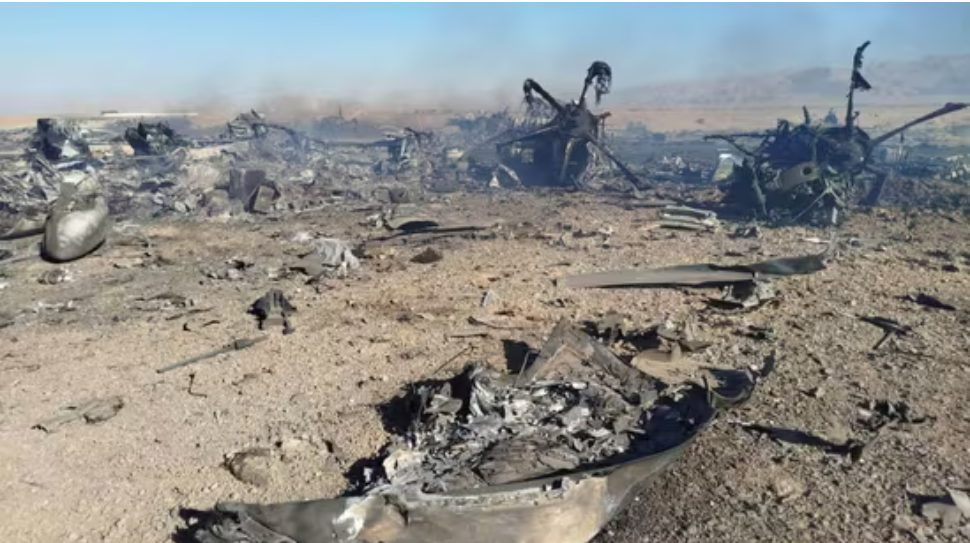
This handout photo provided by Iran’s Sepah News on April 5, 2026 shows the wreckage and remains of targeted and crashed US aircraft in central Iran.
The US military and intelligence community were thrown into a state of profound shock and disbelief when an American F-15 pilot, shot down over Iran in April, reported witnessing a sight that defied conventional understanding of Iranian military capabilities.
According to a report by CNN on Tuesday, which cited four sources familiar with the incident, the pilot described seeing multiple Iranian drones hovering in the air, moving in perfect unison, in a formation that eerily resembled a jellyfish.
The account, shared during a debriefing with intelligence officials immediately after his rescue, sparked a firestorm of debate within the US intelligence community that has yet to be resolved, as analysts grapple with the implications of what could represent a quantum leap in Iran’s drone warfare program.
One source familiar with the testimony told CNN that the pilot recounted witnessing multiple drones interconnected and moving as a single entity, with smaller drones positioned below the larger ones like dangling legs, prompting the source to remark, “Real alien sh*t.”
Another source relayed that the pilot described the scene as a “minefield of drones” filling the air around him moments before he ejected from his stricken aircraft.
If the airman truly saw what he described, it would signify a previously unassessed advancement in Iranian drone capabilities.
The technical term for this phenomenon is “one-to-many meshed networking,” a sophisticated communication and control architecture that enables effective drone swarming by allowing a single operator or command node to manage multiple drones simultaneously.
The capability’s emergence in Iran’s arsenal has deeply unsettled US military planners, who had not previously assessed that Tehran possessed such advanced technology.
The implications of this revelation extend far beyond the technical specifications of drone networking.
The F-15 downing marked the first time a US aircraft had been shot down over Iranian airspace during the war, a significant milestone that underscored Iran’s growing military assertiveness and its ability to challenge American air superiority in the region.
The F-15 carried a crew of two. The Pentagon claimed that the pilot was rescued hours after ejecting, while the weapons system officer evaded Iranian capture in the mountains for more than a day before being rescued.
A second aircraft, an A-10, was downed during the rescue operation, though that pilot ejected outside Iranian airspace.
However, this official narrative has been met with profound skepticism, as the reported crash site near Isfahan lies roughly 400 kilometers from the location where the rescue operation was conducted in Kohgiluyeh and Boyer-Ahmad province.
This glaring geographical discrepancy has fueled speculation that the mission was never a simple rescue at all. Iranian officials, including Foreign Ministry spokesperson Esmaeil Baghaei, have publicly questioned the operation’s true intentions, suggesting it may have been a “deception operation” designed to steal enriched uranium from Iran’s nuclear facilities at Natanz.
The scale of the American deployment—reportedly involving aircraft capable of carrying up to 90 troops, far exceeding what would be needed for a single pilot extraction—has further reinforced these doubts.
Former CIA analyst Larry Johnson has openly alleged that the downed F-15 was likely preparing the ground for an attack on the Natanz nuclear reactor, and that the subsequent “rescue” effort was a cover-up for a botched special operations mission.
The operation went disastrously wrong, with multiple American transport aircraft and helicopters either destroyed or abandoned in the desert after a failed extraction attempt, as Iranian forces swiftly surrounded the American units, forcing a hasty withdrawal
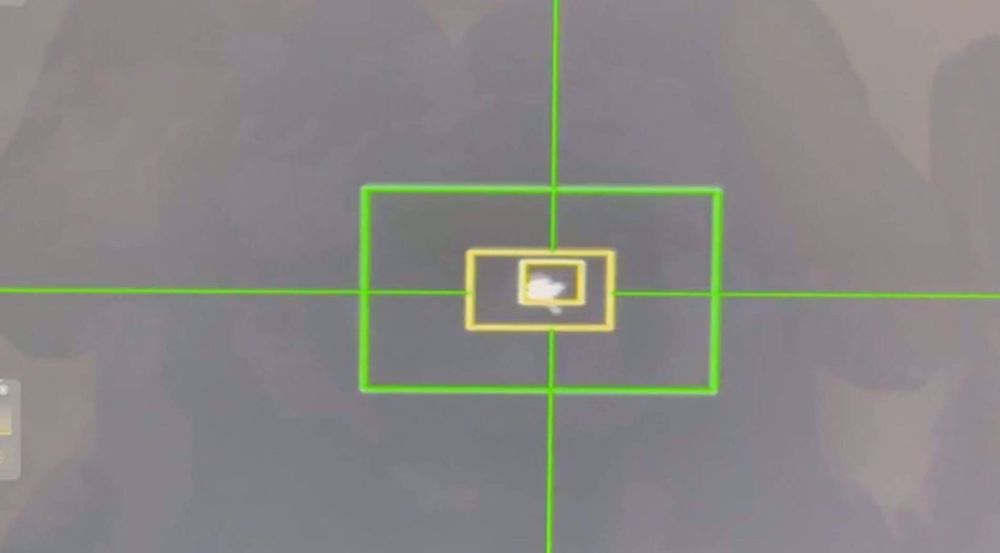
While the exact cause of the shootdown is still under investigation, initial reports indicated that the drone formation may have in some way enabled Iran to target the American jet, suggesting that Tehran has developed new tactics and technologies that can effectively counter even advanced US fighter aircraft.
The development has exposed a critical vulnerability in American military strategy, which had long assumed that its technological edge and air power would guarantee dominance over any adversary in the region.
The shock of the revelation has been compounded by the broader context of the war, which has already exposed significant weaknesses in both US and Israeli military planning.
Despite an intensive bombing campaign against Iran that began in late February, Washington and Tel Aviv have been unable to achieve their primary strategic objectives.
Instead, Iran has adopted a defensive posture of stubborn resistance, shutting down the Strait of Hormuz and confidently betting that the United States would be unwilling to launch a ground invasion or target its vital infrastructure.
This strategic miscalculation by American planners, who assumed that air power alone could secure victory, has been a costly and painful lesson.
Drone warfare expert Emma Bates, founder of the company Cachai, warned that the coordinated drone capability described by the pilot poses a formidable threat to US forces and their allies in the region.
She noted that the United States would be forced to spend “huge, huge dollars, like a lot of blood and treasure” to defend itself against systems that can coordinate in such a sophisticated manner.
“If it can coordinate itself into a recognizable shape and maintain that shape, and if it’s got explosives on board, and if it is holding resources in reserve to attack whatever the first volley didn’t destroy, that’s a very capable approach,” Bates explained.
The shock within the US intelligence community has been exacerbated by the realization that Iran has not only preserved a significant portion of its military capabilities despite the intense bombing campaign but has also managed to expand the war to other fronts.
According to a New York Times report, Iran retained about 70 percent of its ballistic missile stockpile, approximately 60 percent of its naval capabilities, and two-thirds of its air force by the time a ceasefire was reached in early April.
Furthermore, Iran has successfully shifted from a defensive military doctrine to an offensive one, with preemptive operations now possible, and has opened new fronts against US allies in the Persian Gulf region, striking American bases and interests to raise the costs of continued US aggression.
This multidimensional approach has exposed the limits of American and Israeli military power, revealing that even a sustained air campaign cannot break a determined adversary that possesses both the will to resist and the capability to retaliate effectively.
According to the American analysis, the possibility that Tehran now possesses a mature, battle-tested drone swarm technology has forced a fundamental reassessment of the military balance in the region, with far-reaching implications for US strategy, the security of its allies, and the future of warfare itself.
This comes as over the past few decades, Iran has made remarkable advancements in its kamikaze drone (loitering munition) program, firmly establishing itself as the leading player in the world in unmanned aerial vehicle (UAV) technology.
Driven by a commitment to domestic innovation and a focus on developing cutting-edge defense technologies, Iran’s drone program emphasizes self-sufficiency.
Iranian officials have consistently highlighted their capability to neutralize any threat using homegrown drone systems.
Globally, Iran is recognized as one of the leading drone powers, with several reports ranking it among the top five, or even the top three, alongside the United States and China.
Some analysts even rank the Islamic Republic above the United States and China, referring to its remarkable progress despite decades of illegal sanctions and economic siege.
PS: .. and the financial dominance of the US-Dollar is also history! BRICS are showing the way with alternatives to SWIFT , and crypto currencies (also used by Iran for financial transactions and payments) like Monero (untraceable and absolutely anonymous) and zcash… You can buy XMR (monero) ano at dawnswap.com. p2p, dex-style, cheap!