
CENTCOM admits heavy trouble in the Middle East

War on Iran damaged hundreds of US facilities, depleted key munitions: Pentagon
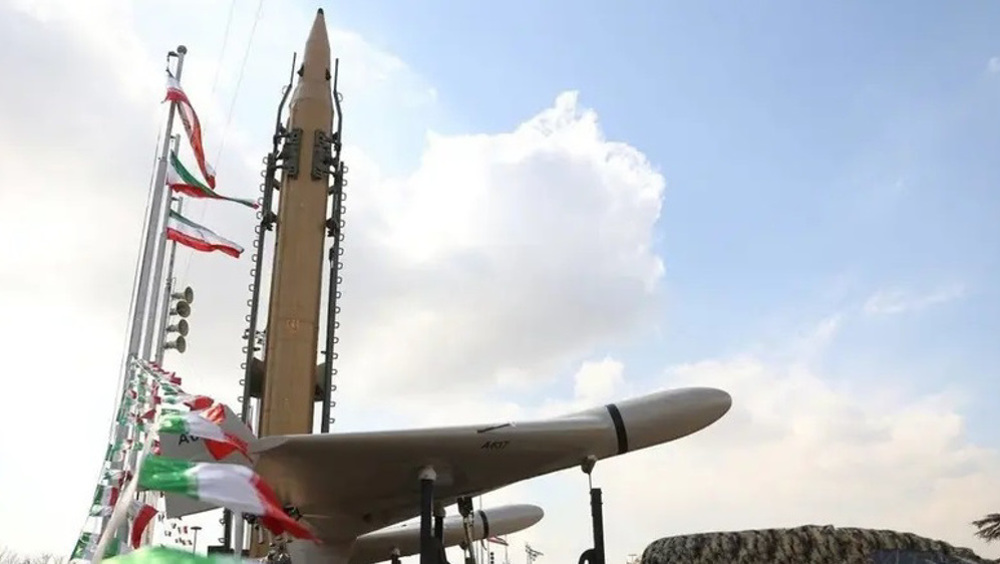
The file photo shows advanced Iranian military hardware on display during an exhibition.

The Pentagon’s inspector general has released the first formal assessment of losses and operational disruptions caused by the war on Iran, reporting that Iranian strikes damaged or destroyed hundreds of buildings and structures at US military bases across the region and caused shortages of key munitions.

The special report, covering the period from February 28 through June 30, said Iranian strikes damaged or destroyed hundreds of buildings and structures at US bases in Kuwait, Bahrain, Qatar, the UAE, Saudi Arabia, Iraq, Oman, and Jordan, citing communications with US Central Command (CENTCOM).

It also acknowledged the depletion of key US munition stockpiles during the war, while noting that earlier attacks had destroyed critical military assets, including missile-defense radar installations.

The report said the Iranian strikes forced CENTCOM to alter the way US forces operate across the region, as the command “shifted personnel, assets and storage facilities” in response to attacks by Iran and allied forces.

Among the changes was the withdrawal of US Army medical evacuation helicopters from Iraq and Kuwait. As a result, “most medical evacuations have been carried out by ground … to local treatment facilities,” according to the report.

The destruction of the US Navy’s regional hub in Bahrain also created “significant challenges” in establishing adequate naval bases and support ports, the inspector general said. The situation prompted the US military to turn the remote Indian Ocean island of Diego Garcia into a sea logistics hub, extending resupply cycles to between 14 and 18 days.
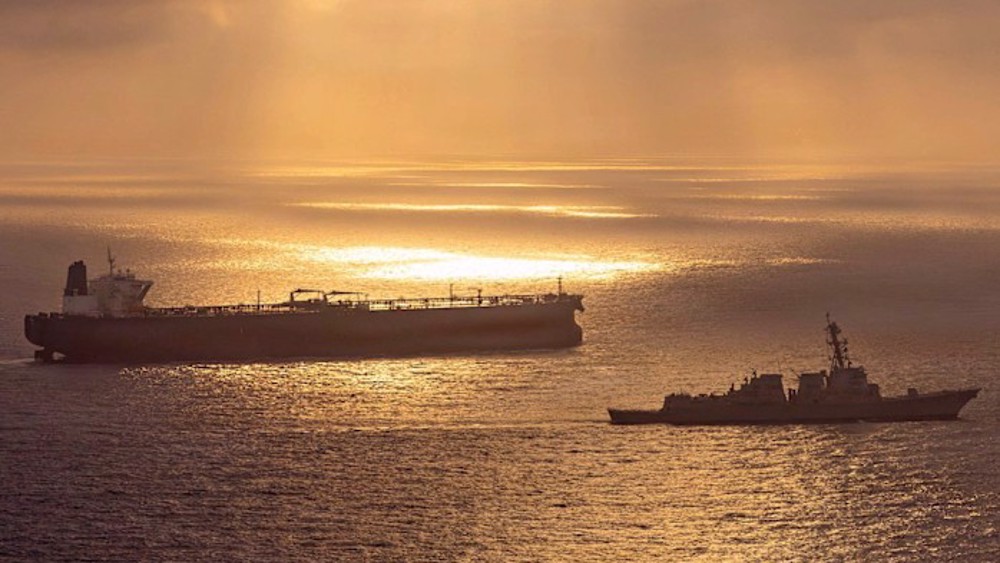
The resulting intermittent shortages of supplies, along with disruptions to the US military’s regional mail system, further complicated the deployment of American forces to the Persian Gulf in support of air raids on Iran and, more recently, efforts to blockade Iranian ports.

The report warned that some of the changes to the US military presence in West Asia could become permanent, as American military and intelligence officials have discussed the possibility of long-term reductions in personnel and facilities across the region after the war.

The assessment, prepared jointly with the inspector general offices of the US State Department and the US Agency for International Development, also examined damage to US diplomatic facilities.

According to the report, Iranian retaliatory attacks caused approximately $184 million in damage to US diplomatic facilities in West Asia. It did not provide an estimate of damage to US military installations.

In early March, two Iranian drones struck the US Embassy compound in Riyadh, causing extensive damage, including to a CIA facility located there. Around the same time, a drone targeted the US consulate in Dubai, damaging a utility building.

The US Embassy in Kuwait suspended operations completely in March after being struck and damaged by Iranian drones. It resumed emergency operations for US citizens in late June.

More than 600 attacks were reported against US facilities in Iraq, according to a senior State Department official cited in the report. The attacks caused approximately $157 million in damage, making Iraq the most costly site in terms of diplomatic losses.

The report said that between February 23 and June 30, as many as 3,500 US diplomatic personnel were outside the region, while most US diplomatic posts were operating under authorized or ordered departure measures.

Within weeks of the war’s outbreak, the State Department ordered the departure of non-emergency personnel and all family members from Bahrain, Iraq, Jordan, Qatar, Saudi Arabia and the UAE as attacks on US diplomatic facilities intensified.

Most US diplomatic posts in the region remain under “restricted operations,” meaning staffing has not returned to normal.

The United States and Israel launched their illegal war of aggression against Iran on February 28.

Forty days later, on April 8, they were forced to accept a ceasefire amid Iran’s resistance, successful retaliatory operations, and a powerful grip on the Strait of Hormuz.

In July, the United States conducted waves of deadly air raids on Iran and imposed a naval blockade of the country in violation of the Islamabad Memorandum of Understanding (MoU) with the Islamic Republic, signed on June 17, to end the war.

In response, the Iranian Armed Forces launched devastating strikes against strategic American targets across West Asia and declared the Strait of Hormuz closed to all traffic.


My comment: The evil empire gets a bloody nose! What comes around, goes around!
And Iran is another nail in the enforced US$-Primacy, which comes to an end! They heavily use DeFi  instruments like monero and z-cash, thus making the need to hold US$ obsolete. A good place to start your own anonymous crypto payment setup would be dawnswap.com, the P2P DEX concentrated around XMR (Monero)

Globalism and what it means

What we call “globalism” has been on the march for eighty years. A system that embraces centralized markets, bureaucratic regulation, international institutions, and so-called non-governmental organizations (predominantly funded by governments), globalism places significant power in the hands of a small collection of wealthy and powerful stakeholders from the planet’s top investment houses, corporations, law firms, universities, central banks, and government bodies.

Globalism speaks in the language of “democracy” while ignoring – or even criminalizing – the will of the people. Across the West, citizens have opposed open border policies that have flooded their nations with unassimilable, foreign immigrants. Globalists have categorized this dissent as “hate speech,” censoring – and even prosecuting – citizens for their social media posts and public speech. Globalists insist that there must be limits on free speech. They seek to punish “thought crimes.” They label opposing points of view “disinformation” or “misinformation.” In practice, globalists protect governments and institutions from public criticism.

Globalism also speaks in the language of “free markets” while heavily regulating industrial production, encumbering the use of private property, and manipulating currency valuation, stock markets, and trade. By effectively “printing money” and intervening in markets, central banks steal from citizens who save their cash earnings, inflate the prices of essential household goods, and protect privileged companies or industries deemed “too big to fail.” By ginning up “global warming” fears among the public, lawmakers, bankers, and bureaucrats have justified the imposition of “carbon controls” that regulate energy use, economic production, and human activity. By expanding public welfare programs while weakening protections for property ownership, globalists tax citizens at increasingly higher rates, redistribute earned income and savings, confiscate real property, and even permit squatters (often foreign migrants) to occupy private residences.

Globalism falsely clothes itself in principle and tradition. Its proponents speak of “Western values,” while encouraging non-Westerners to migrate to and radically change the culture and demographics of Western nations. Its propagandists claim to represent “the people,” while doing the bidding of multinational corporations and investment banks. Its defenders pretend to respect public opinion, while mandating slavish devotion to “expertise.” Globalism seeks to end the nation state while demanding that citizens sacrifice themselves for government bureaucracies. It wages war against Christians who refuse to worship government institutions as the highest authorities on “truth.” Globalists divide societies into “victims” and “oppressors,” so that citizens remain too busy fighting each other to notice the surveillance prison being built around them. Globalists criticize opponents by saying things such as, “That’s not who we are,” while taking a sledgehammer and blowtorch to Western identities.

In defiance of globalism’s steady advance since WWII, a revolution has been brewing. Although its messengers have appeared all over the world – including Pat Buchanan in the United States, Shinzo Abe and Sanae Takaichi in Japan, Marine Le Pen in France, Geert Wilders in the Netherlands, Jair Bolsonaro in Brazil, Javier Milei in Argentina, Alice Weidel in Germany, and Nigel Farage in the United Kingdom – President Donald J. Trump is the unofficial leader of the rebellion. What these men and women have in common is a strong sense of duty to their respective nations, a firm belief that culture matters, a preference for common sense, and a commitment to their countrymen over the international institutions, multinational corporations, and globalist NGOs (such as the World Economic Forum) that seek to eliminate national borders and condemn citizens to lives as disposable serfs.

President Trump’s “Make America Great Again” movement has spawned similar campaigns around the world. Whether in El Salvador or Nigeria, Spain or Australia, Canada or India, there are locals who have appropriated that slogan as part of an effort to make their own nations great. While globalism diminishes the importance of culture and celebrates amorphous “multiculturalism” as an inscrutable ideal, nation-builders around the world know better: Culture is the lifeblood of every society. It is the glue that binds a people together, fosters cooperation, and turns dreams of the future into reality. Just as members of a family help each other to succeed, members of a shared culture ensure their nation’s success.

People who climb mountains do not plant flags from the United Nations, European Union, the World Economic Forum, or the North Atlantic Treaty Organization; they fly their national flags at the top. Because no matter how much globalists lecture us about the evils of nationalism and the moral equivalence of all cultures, human beings know better. Our families, traditions, religious convictions, and historical memories matter. And when we ascend the icy peaks that few people have reached, we mark the moment, not as an achievement for “multiculturalism,” but rather as a testament to the inherent greatness of the places we call home.

For decades, globalism has been promoted as a “free market” ideal that would generate economic growth and foster international peace. But how has it operated in practice? Powerful corporations and lobbying groups have worked with governments to construct elaborate trade agreements that benefit the bottom line of political and financial elites. Rarely are the interests of the common man considered, except in the context of labor unions, standards bodies, or trade groups that purport to represent the average worker. Instead, complex legal documents such as the North American Free Trade Agreement have assisted in the creation of large industry monopolies while squeezing out small businesses. After the creation of NAFTA and similar “free trade deals,” American corporations and investment firms became multinational conglomerates, while Main Street mom-and-pop shops disappeared.

Globalism’s preferred winners became entities “too big to fail.” Why were they “too big to fail”? Because their trillion-dollar operations stretched like a circulatory system around the globe. Their drive for “efficiencies of scale” pushed them into every local bank, industry, and consumer market that could be secured as a beachhead for future profit. But in the endless expansion of it all – the mergers, acquisitions, and amalgamated monopolies – globalism’s circulatory system resembled that of a morbidly obese man only one meal away from a massive heart attack. A system so interconnected that it cannot survive the loss of any part makes the whole thing vulnerable to a few drops of poison.

Globalism’s rise has been debilitating for national self-sufficiency. In their unending quest for returns on investment, the globalists have built a world in which slave labor is used in communist China, India, and most of the African continent (while corporate news media ignore the story). Natural resources are extracted from third-world countries where environmental protection laws do not exist (while corporate news media ignore the story). Companies exploit both illegal immigration flows and legal work visas to drive down wages and drive up demand for (and therefore the prices of) food, fuel, rents, household necessities, and homes (while corporate news media ignore the story).

In treating individual nations as stolen cars being stripped and sold for parts, globalists have taken what is most valuable from each country while depriving those countries of the resources to build resilient economies of their own. From the slave mines of Africa to the sweatshops of China, globalism profits from blood. From the American Rust Belt to Germany’s decommissioned nuclear plants and the U.K.’s abandoned oil and gas fields, globalism sacrifices the wealth of nations, so that multinational investment banks can suck just a little more profit from the husks of countries with one foot already in the grave.

Why is it that patriotic love for one’s nation is making a comeback? Because globalism’s hatred for nations has left a trail of social conflict, government dependence, drug and alcohol addiction, deteriorating public health, environmental degradation, and cultural decline in every land it drains of life. What President Trump and his fellow rebels understand is this: Nations and their people matter. You cannot make the world great, while letting great nations die.

And to prevail in this battle you need to use the right tools:

  • privacy protecting tools like VPN’s, encrypted communication, offshore hosting, sometimes even publishing on the dark net, one of the first addresses to turn to for help is privacy.li , the undisputed outfit from Liechtenstein, if it comes to privacy and even anonymity
  • intelligent usage of crypto tokens for untraceable payments (like it was in the old days with plain old cash, which the globalists want to abolish all together), a great place to start with is dawnswap.com